
Quick answer
Whale watching in Vancouver requires booking a tour with a licensed operator departing from Vancouver Harbour or Coal Harbour. Tours operate daily from 08:00 to 20:00, with morning departures between 08:00 and 14:00 offering calmer seas and higher sighting rates. There is no public land-based viewing site with reliable whale access.
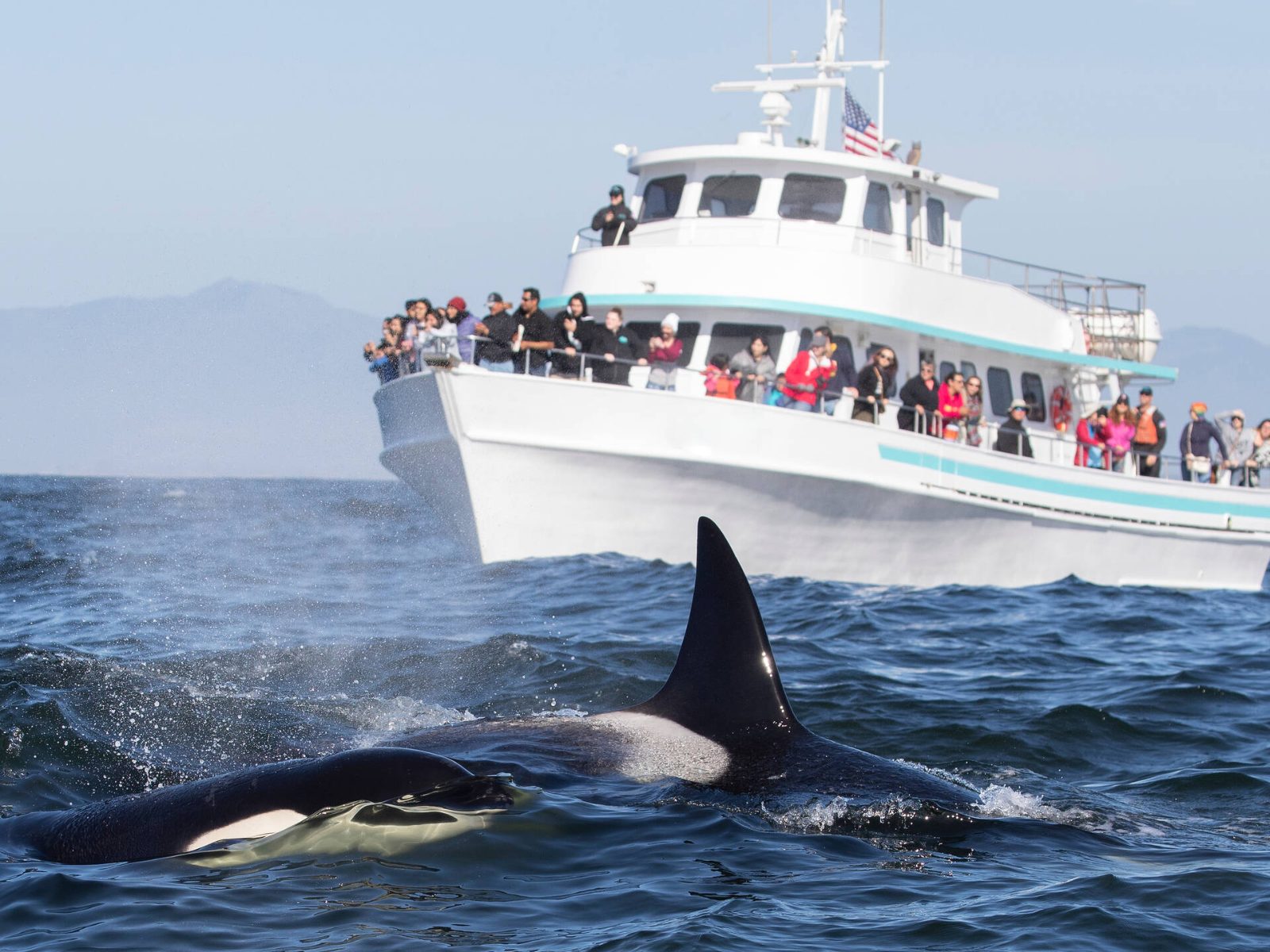
Three resident orca pods—J, K, and L—return to the Salish Sea each spring, following Chinook salmon runs that peak between May and September. Humpback whales arrive later, typically from June through October, feeding on herring and krill in the nutrient-rich waters off the Fraser River delta. Grey whales pass through in March and April during their northward migration from Baja California to the Bering Sea, though sightings from Vancouver proper remain less predictable than those farther up the coast. Where to see whales in Vancouver depends entirely on departure logistics rather than a single viewing platform. Coal Harbour serves as the primary embarkation point, with vessels ranging from open Zodiacs to enclosed cabin cruisers. Most operators hold Transport Canada certification and employ marine biologists as interpreters. Trip durations span three to five hours, covering distances of up to thirty nautical miles into the Strait of Georgia and Howe Sound. Sightings are never guaranteed—marine mammals move according to prey availability, tidal cycles, and water temperature—but encounter rates from May through September exceed seventy percent on most routes. Whale watching tours in Vancouver follow federal approach guidelines established under the Marine Mammal Regulations. Vessels must remain at least two hundred metres from orcas and one hundred metres from other cetaceans, with engines in neutral when animals surface within four hundred metres. Hydrophone equipment allows passengers to hear echolocation clicks and social calls without encroaching on protected space. Binoculars are provided, though sightings often occur within fifty metres when animals choose to approach the boat. Bookings open year-round, but the shoulder months of April and October see fewer departures and require advance confirmation. Cancellations due to weather or sea state are handled with full refunds or rescheduling. Most operators recommend layers, waterproof outerwear, and seasickness medication for passengers prone to motion sensitivity. Children under six are permitted on larger vessels but restricted from Zodiac tours due to stability concerns.
“Three resident orca pods return to the Salish Sea each spring, following Chinook salmon runs that peak between May and September.”
Best Time to Know Where to See Whales in Vancouver
The whale watching season in Vancouver typically runs from April through October, with the optimal daily arrival window between 08:00 and 14:00. Morning departures frequently benefit from calmer water conditions, which can improve visibility and overall comfort during transit.
April–June
Moderate10°C to 18°C. Mild temperatures with variable spring conditions. Peak activity for Bigg's killer whales begins as they follow harbor seal populations.
July–August
High18°C to 25°C. Warm and dry weather. This period provides the highest probability of sighting humpback whales and transient orcas.
September–October
Low12°C to 20°C. Cooling air and water temperatures. Whales remain active as they feed before the winter migration patterns shift.
Daily 08:00–14:00
——
Morning tours often offer calmer waters and higher likelihood of whale sightings.
Verdict: The best opportunity to view whales is during the peak summer months of July and August, specifically arriving for tours between 08:00 and 14:00.
Operational Hours for Where to See Whales in Vancouver
The whale watching reservation office maintains consistent operational hours throughout the week to assist with tour inquiries and bookings.
| Monday | 08:00–20:00 | |
|---|---|---|
| Tuesday | 08:00–20:00 | |
| Wednesday | 08:00–20:00 | |
| Thursday | 08:00–20:00 | |
| Friday | 08:00–20:00 | |
| Saturday | 08:00–20:00 | |
| Sunday | 08:00–20:00 |
Admission and Costs for Where to See Whales in Vancouver
There is no public viewing site for whale watching in Vancouver, meaning there is no entrance fee to access the waterfront area. All costs for whale watching are associated with booking a private tour operator.
The entry fee to the harbour is 0 CAD, with total costs determined by the specific private tour operator selected.
Directions for Where to See Whales in Vancouver
Whale watching departures are located at Vancouver Harbour/Coal Harbour. The area is accessible via public transit, car, or by walking from the downtown core.
Canada Line to Waterfront Station
Various routes to West Hastings Street
Access via West Georgia Street to Coal Harbour
Walk north from Downtown Vancouver toward the waterfront
Pre-Visit Checklist for Where to See Whales in Vancouver
Whale watching tours require advance booking and weather-appropriate gear for a comfortable experience on the water.
-
Book your tour in advance — Popular operators fill up quickly, especially during peak season (May–October).
-
Check weather and sea conditions — Tours may be postponed or rerouted if conditions are unsafe.
-
Bring layers and waterproof clothing — Ocean winds and spray can make it cold even on warm days.
-
Pack sunscreen and sunglasses — Glare off the water is intense; UV exposure is high.
-
Carry identification and confirmation email — Operators require ID for check-in and your booking reference.
-
Arrive 30 minutes before departure — Check-in, safety briefings, and boarding take time.
-
Bring a camera with zoom lens — Whales may surface at a distance; phones often struggle with range.
-
Consider motion sickness medication — Smaller vessels can experience significant swells in open water.
Check availability
Frequently asked questions about where to see whales in vancouver
Everything you need to know about where to see whales in vancouver